Reading mode
Visual mode

CLIENT
PH-LIFT, a national platform supporting 3,000+ local and 50 state health departments by centralizing public health data, delivering insights to guide decisions and improve community health.
TEAM
Project Manager
Data Specialist
Creative Director
Developers (2)
SERVICES
UX/UI Design
Design System
Rapid Prototyping
Accessibility (WCAG)
STACK
Dovetail
FigJam
Figma
D3.js
STATUS
Under Development
Challenge
In public health, clarity and trust are non-negotiable.
As a newly built public health platform serving researchers, policymakers, and health professionals, the product required a scalable design foundation capable of supporting dense dashboards, structured reporting, and long-term expansion without compromising consistency.
My Role
I established the design system from the ground up, defining the visual and interaction standards that unified the platform experience.
Key contributions:
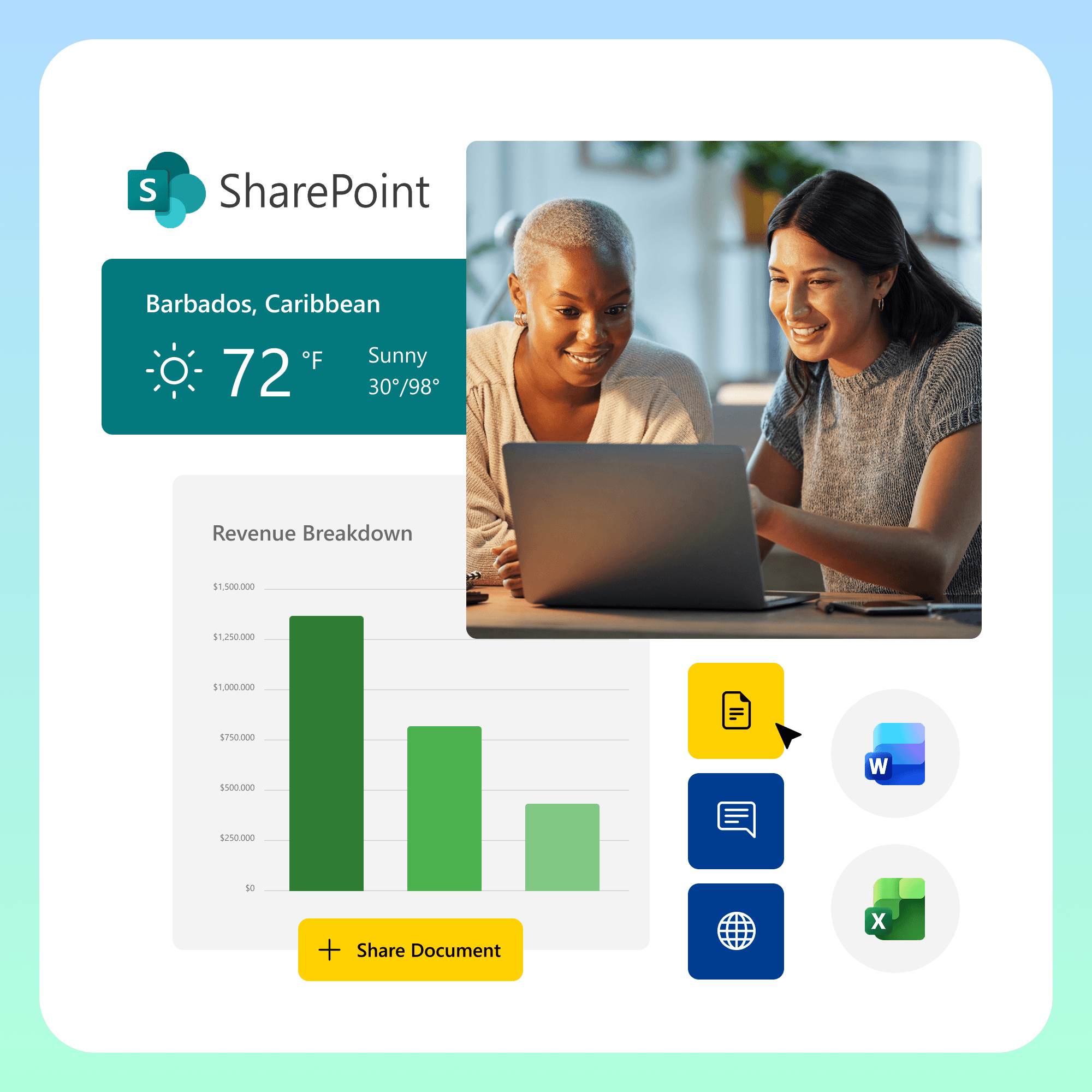
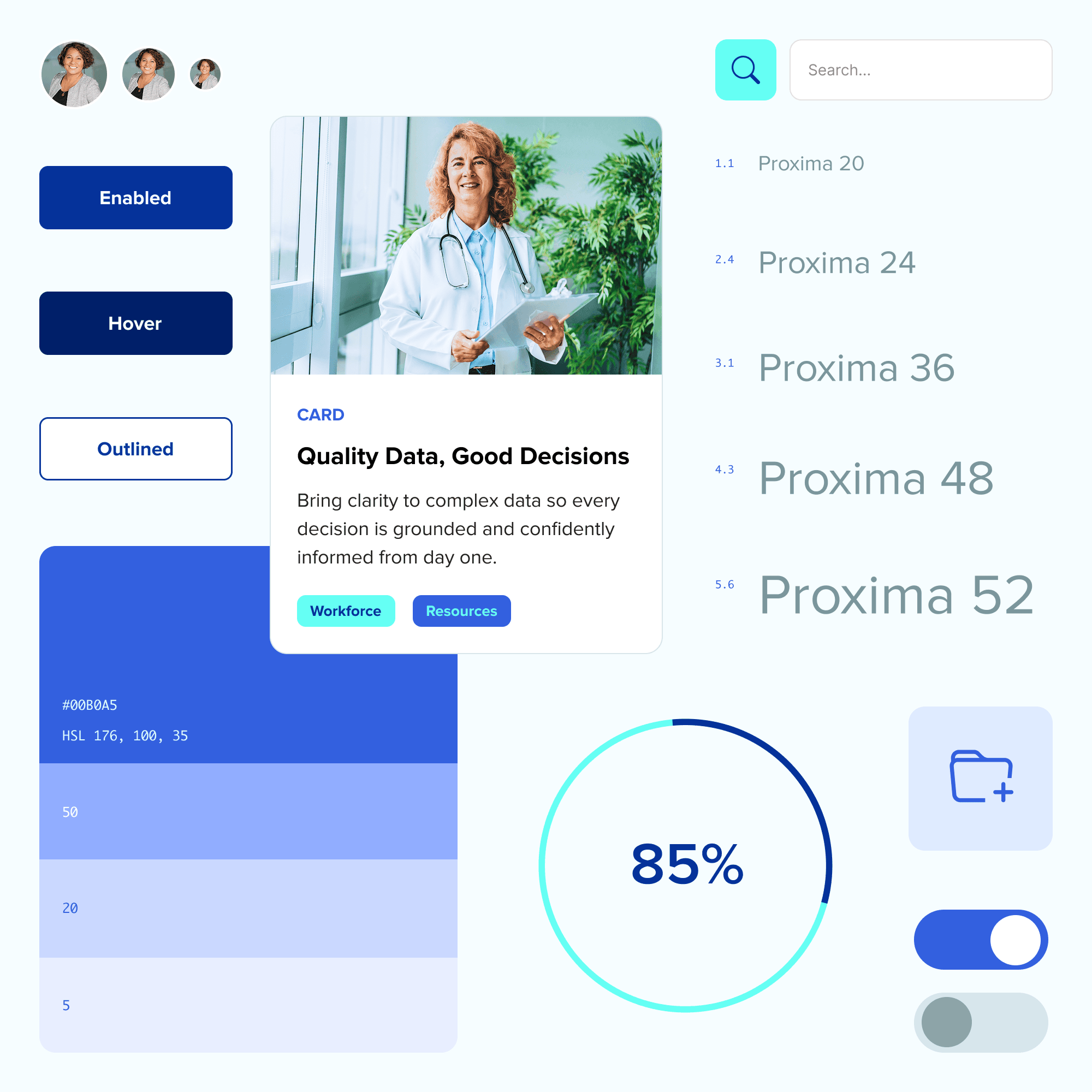
Built reusable components and patterns to support complex dashboards and structured reporting.
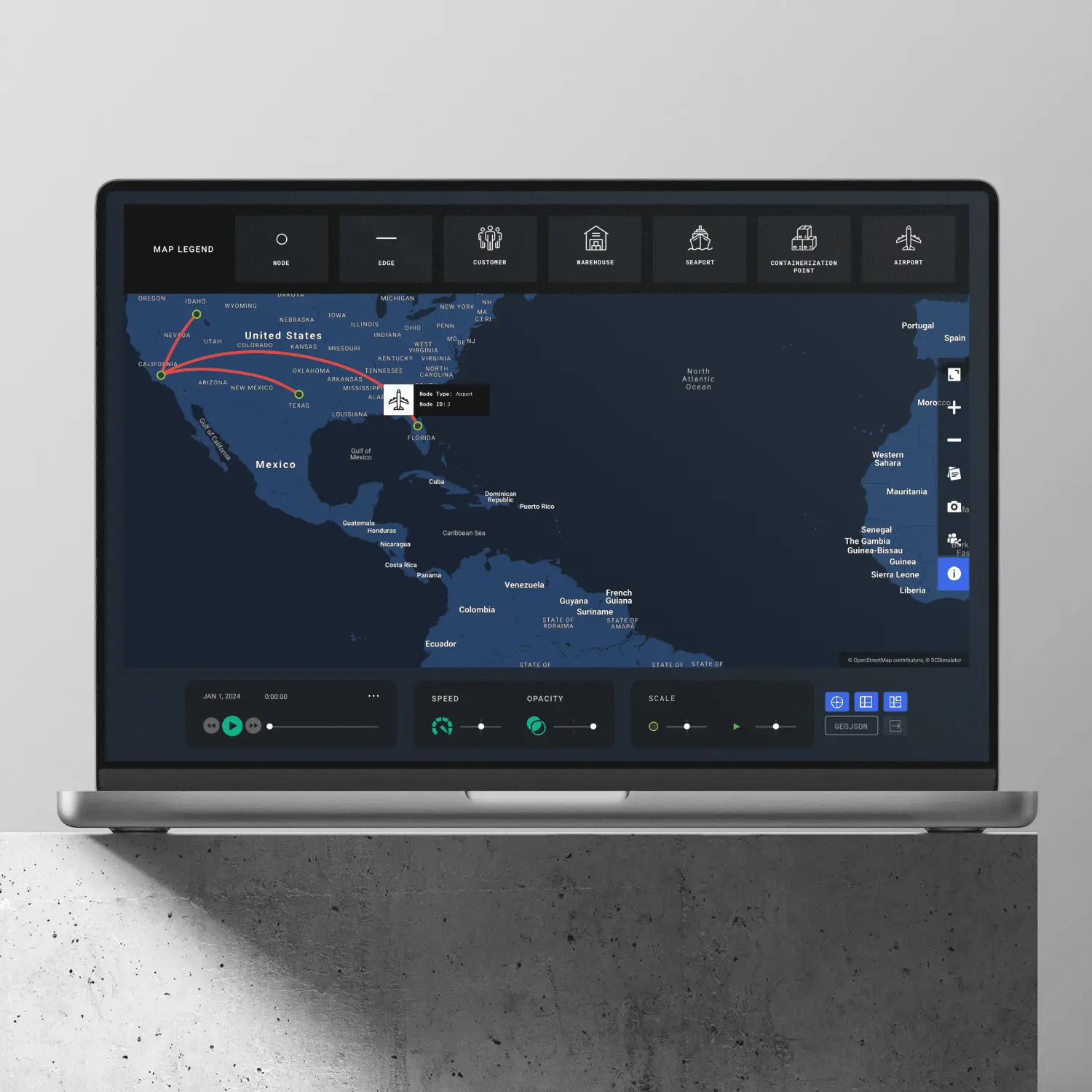
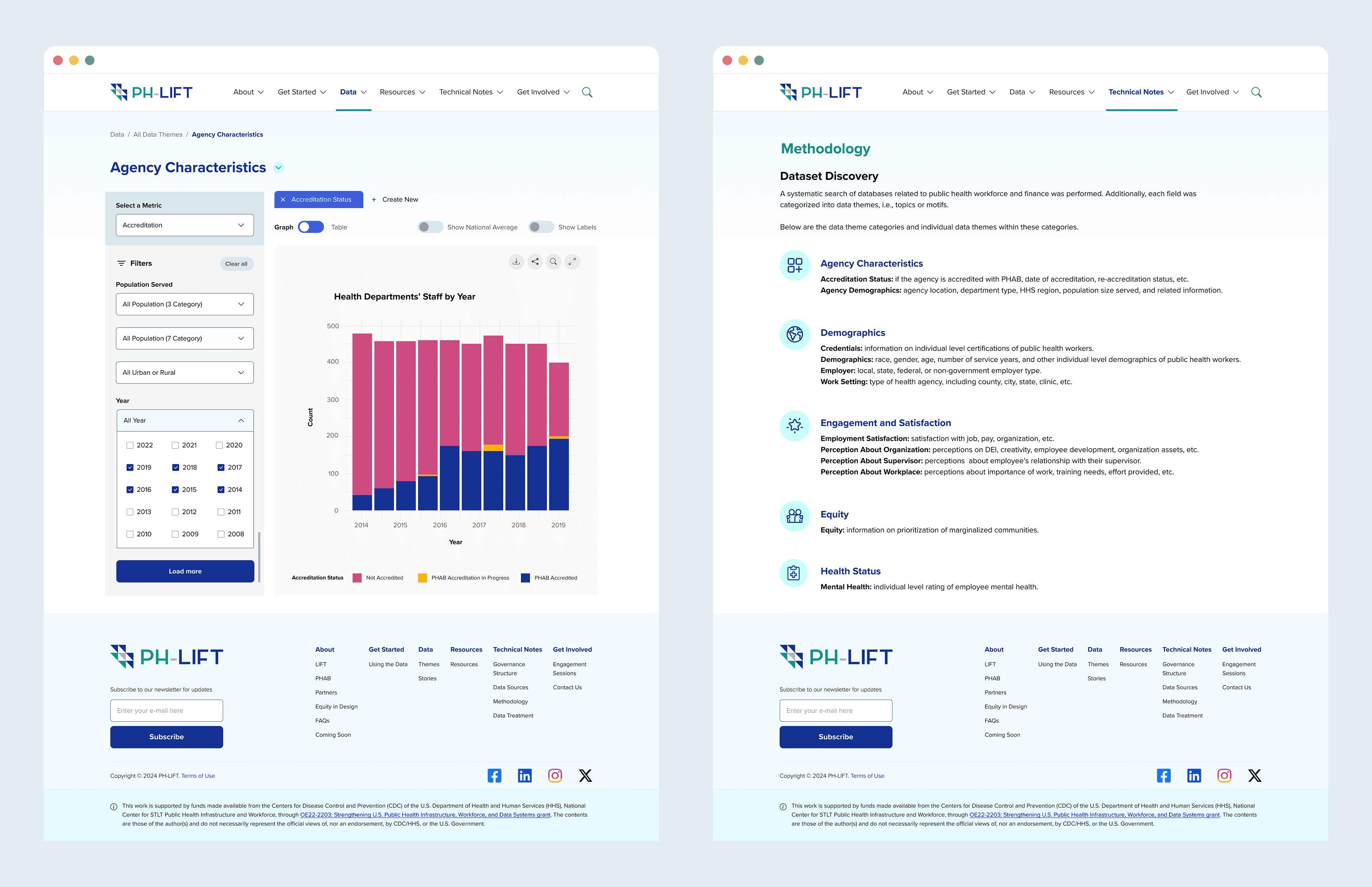
Designed scalable dashboard layouts tailored for dense public health data.
Defined visualization principles in collaboration with engineers implementing D3-based charts.
Prototyped core workflows to validate structure and gather stakeholder feedback.
Documented component behavior and usage rules to maintain consistency as the product evolved.
Research & Insights
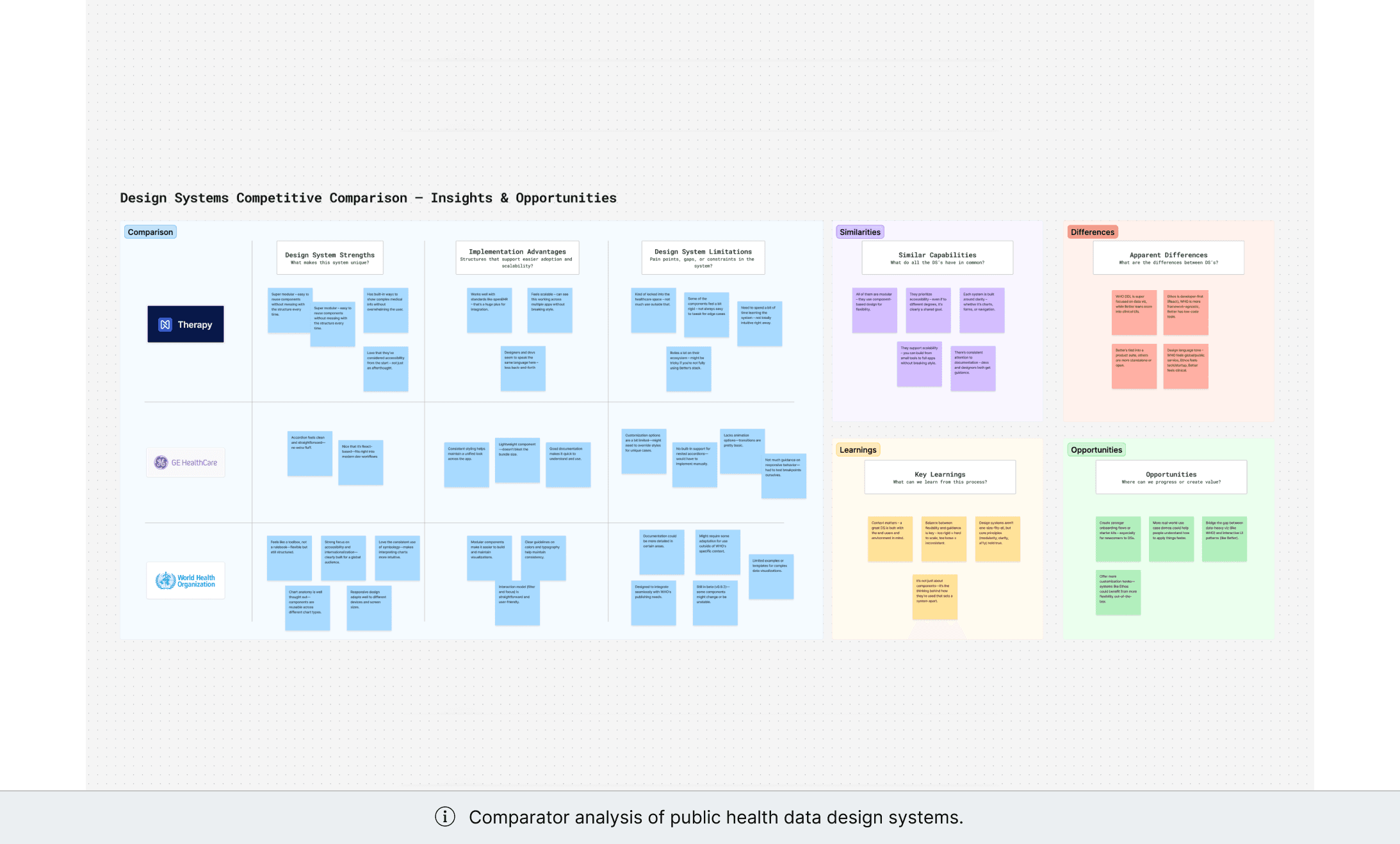
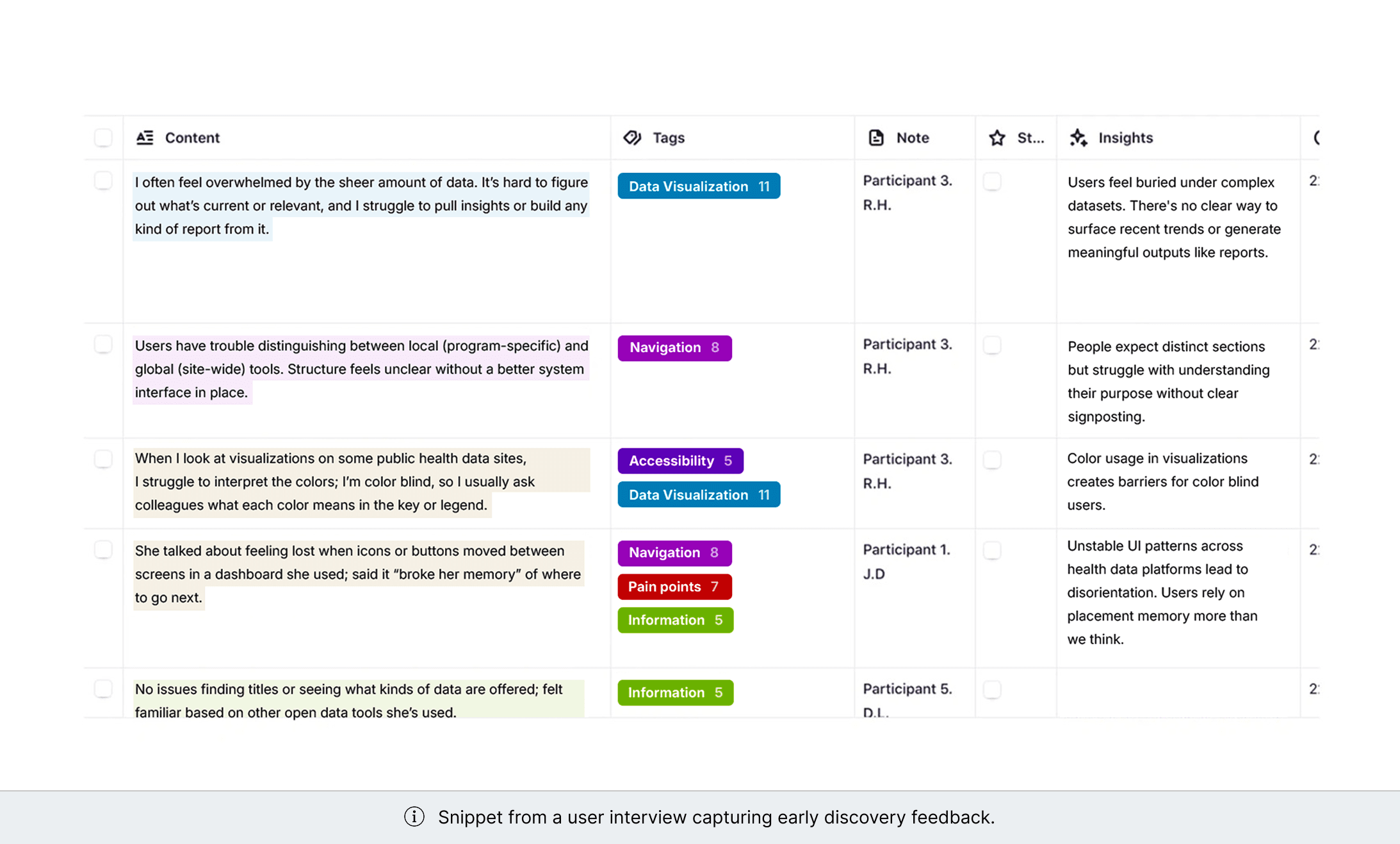
We interviewed stakeholders and prospective users to understand how different roles would access and use public health data. In parallel, I reviewed comparable public health platforms and data-heavy systems to identify gaps and proven interaction patterns.
The research surfaced several key needs, including:
The system had to support varying levels of digital literacy while remaining accessible at every layer.
Dashboards needed to present large amounts of data in a way that was easy to scan, compare, and interpret.
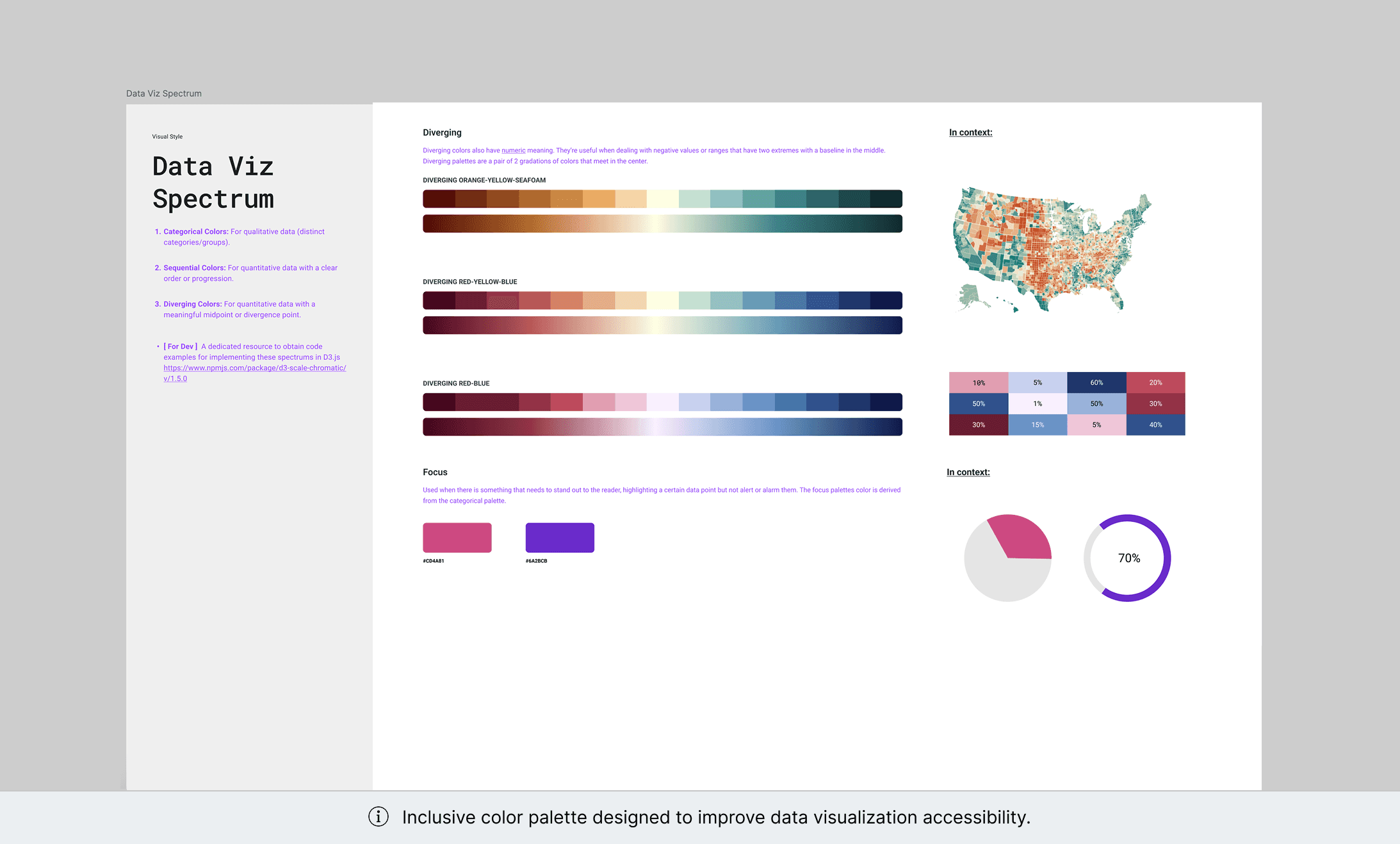
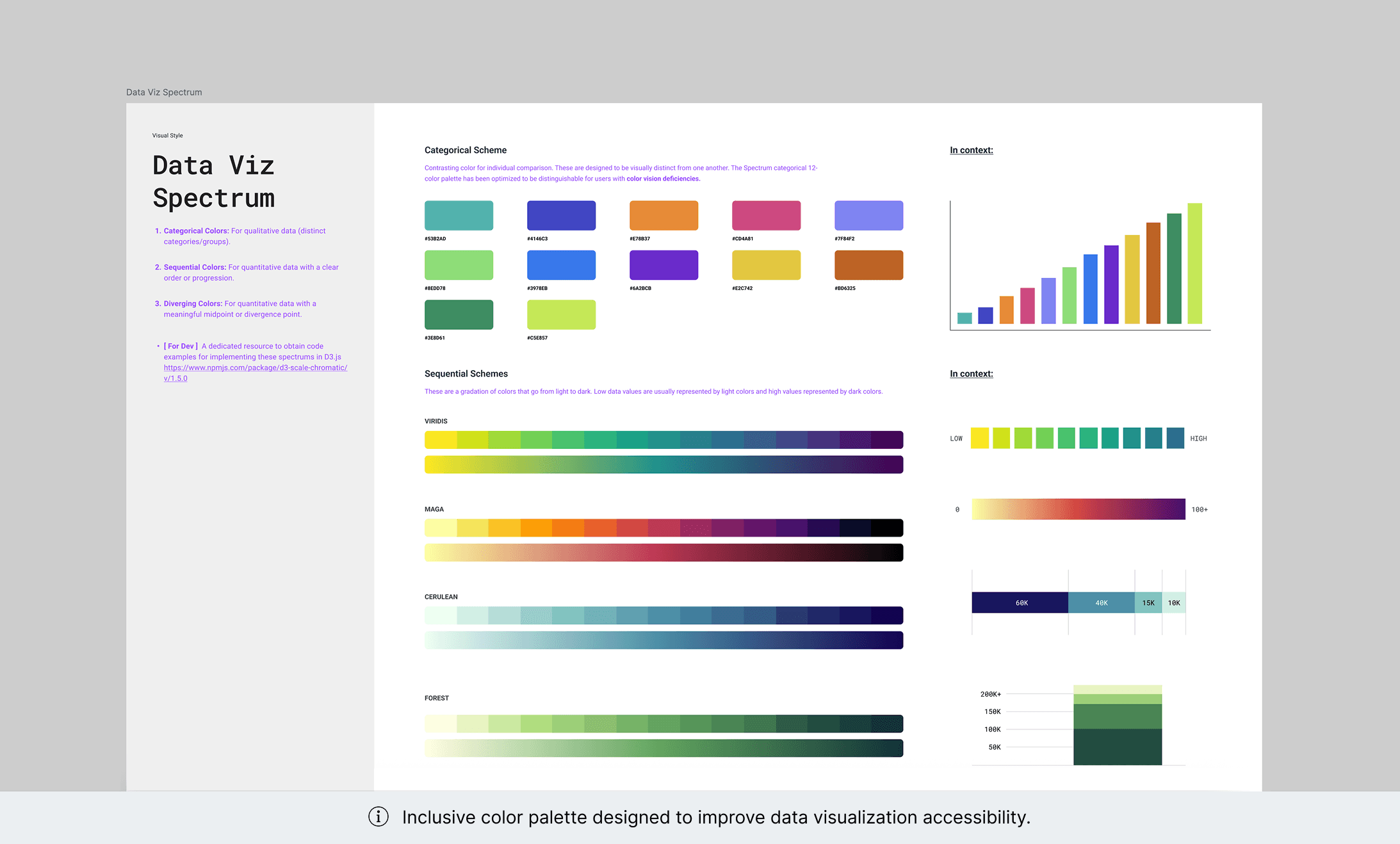
Visualizations had to move beyond static charts and clearly highlight trends, shifts, and outliers that support decision-making.
Design & Testing
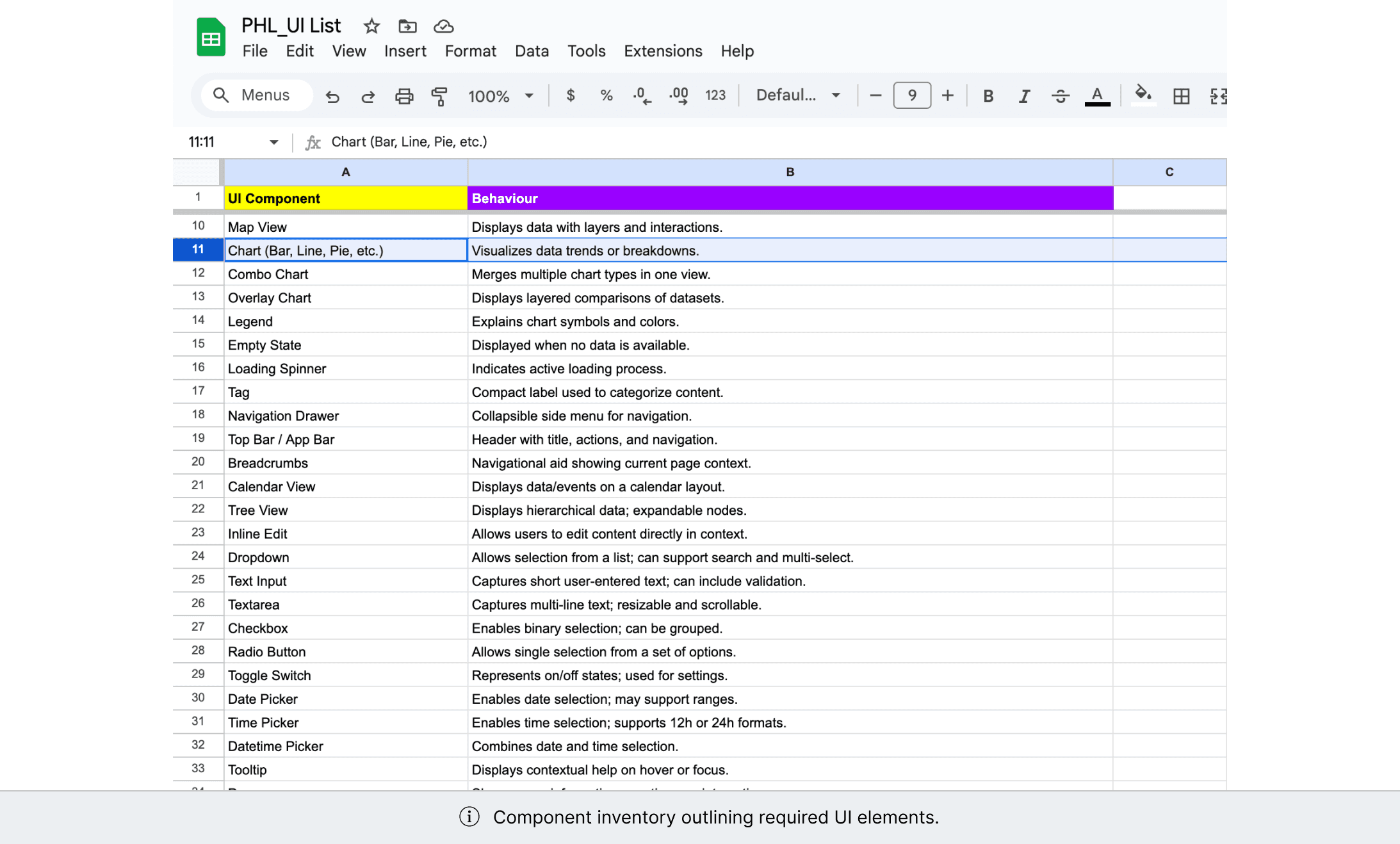
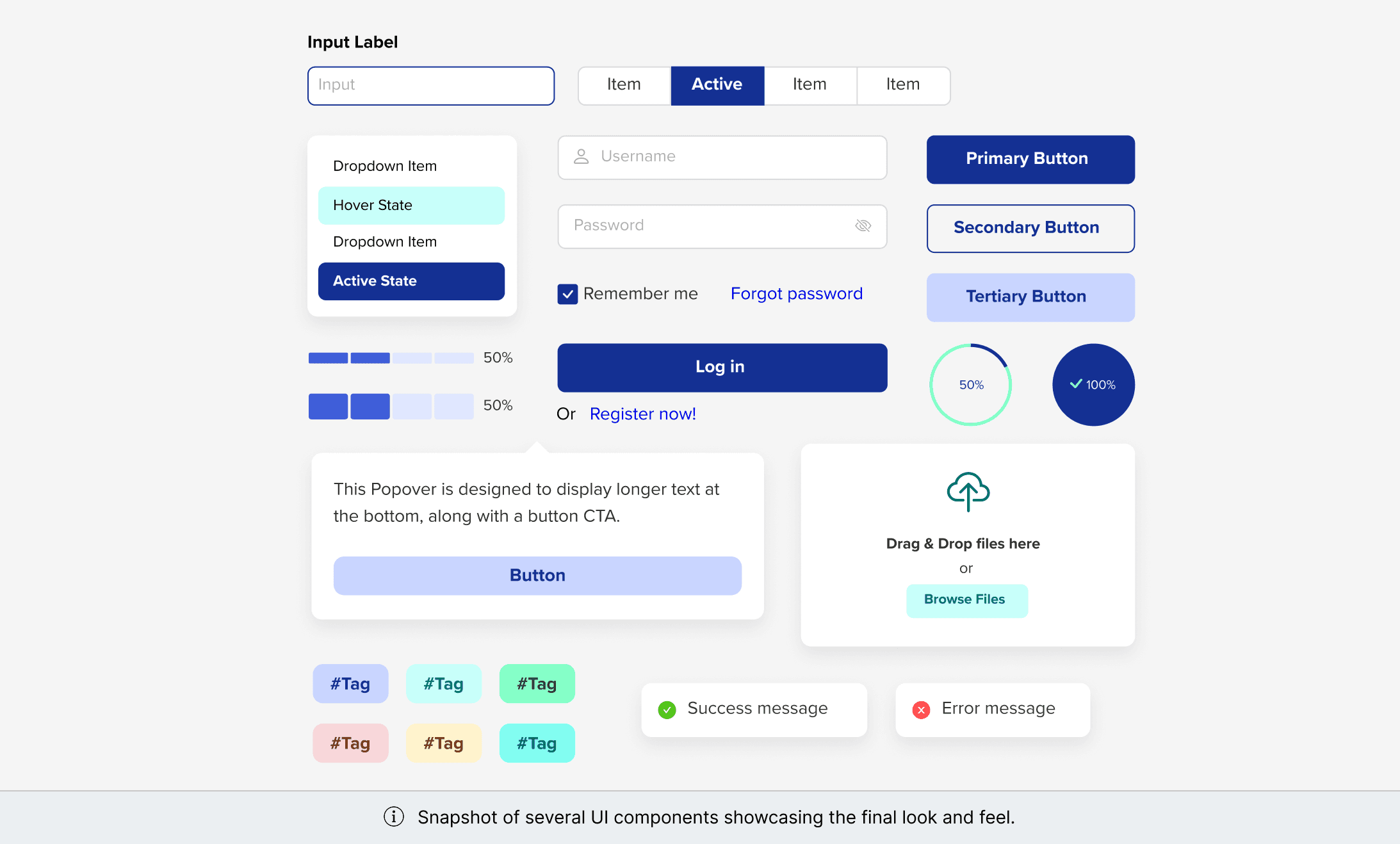
I began by auditing the interface and defining a comprehensive UI inventory to standardize component behavior across the system.
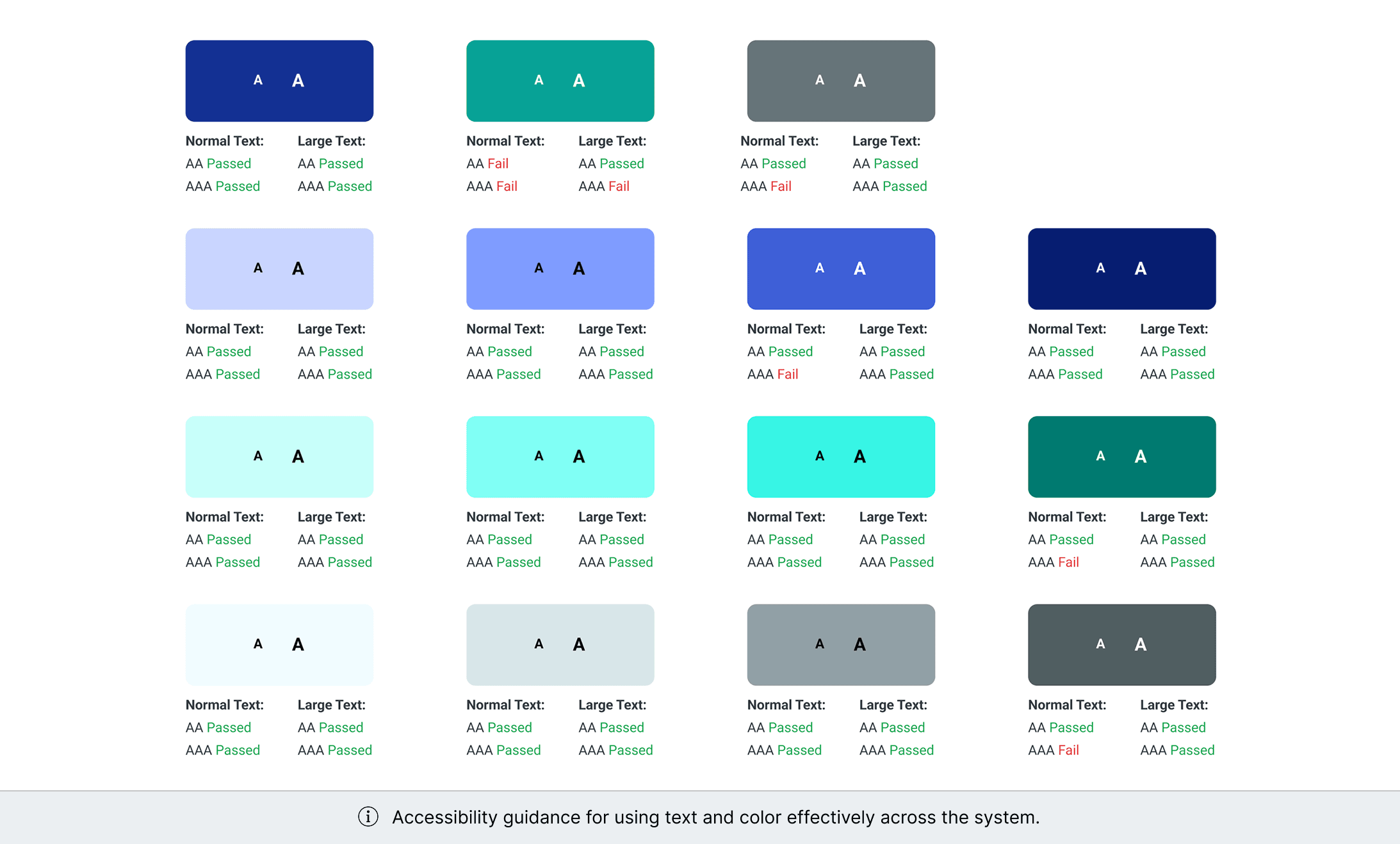
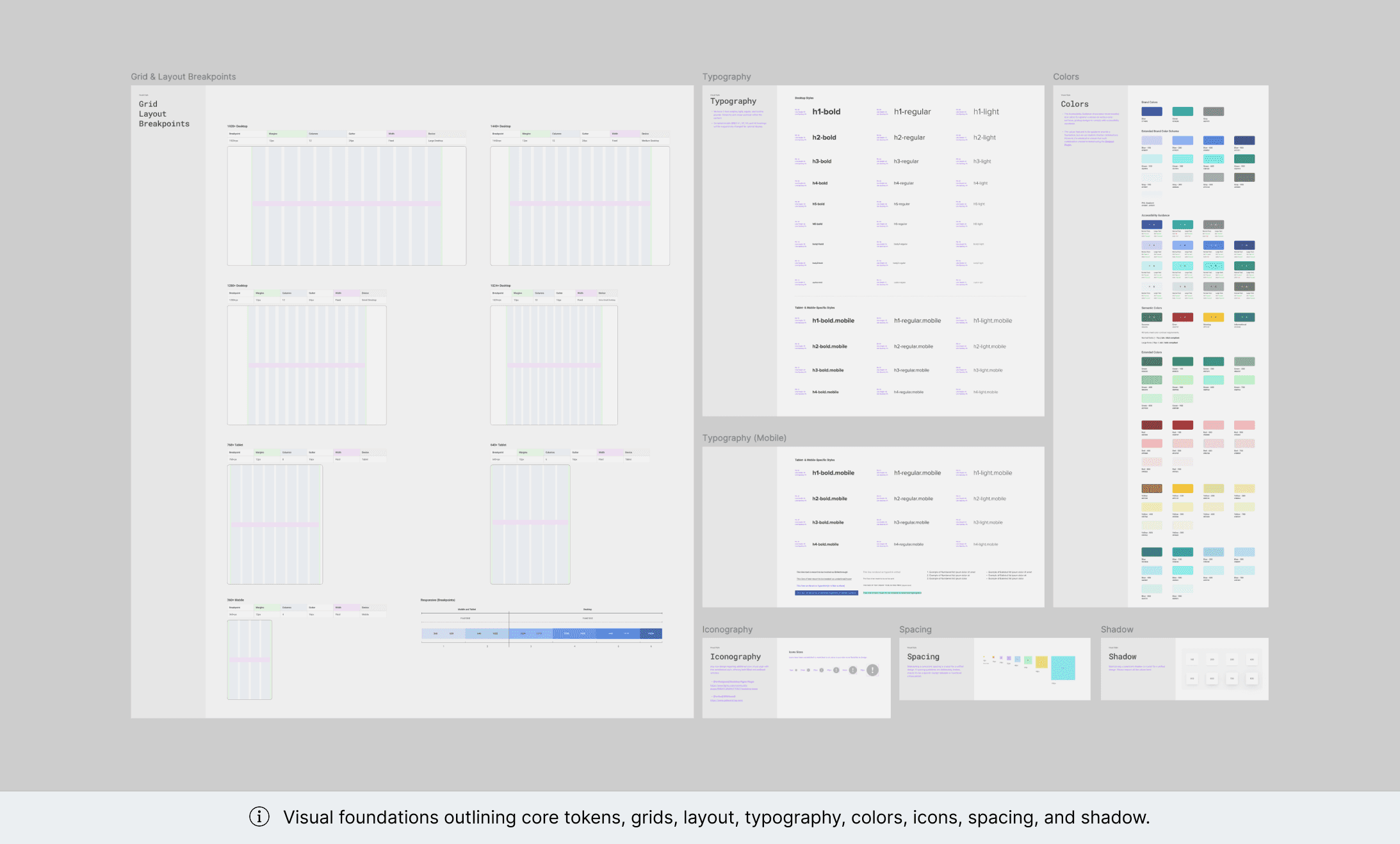
I established the visual foundation through color, typography, grid, and spacing systems, ensuring accessibility and alignment with Ph-Lift brand.
The system evolved from foundational components to complex data modules, including responsive tables, filters, and comparison views designed to support D3.js powered dashboards in the front-end.
Each component was documented with clear usage rules and interaction guidance, creating a shared reference for design and engineering.
Interactive prototypes were tested with internal stakeholders through task-based sessions, validating real workflows and ensuring the system supported efficient data exploration.
Solution
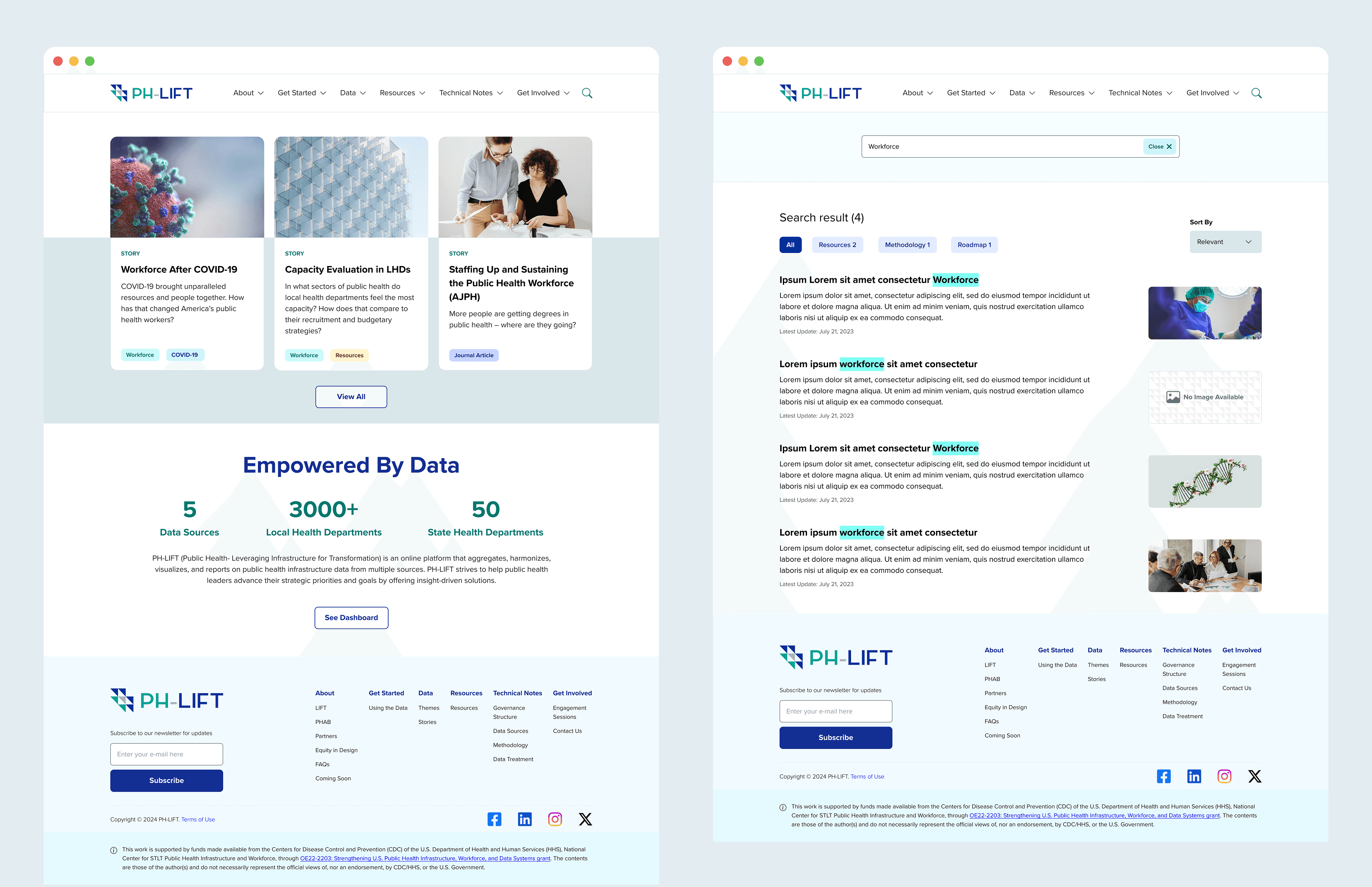
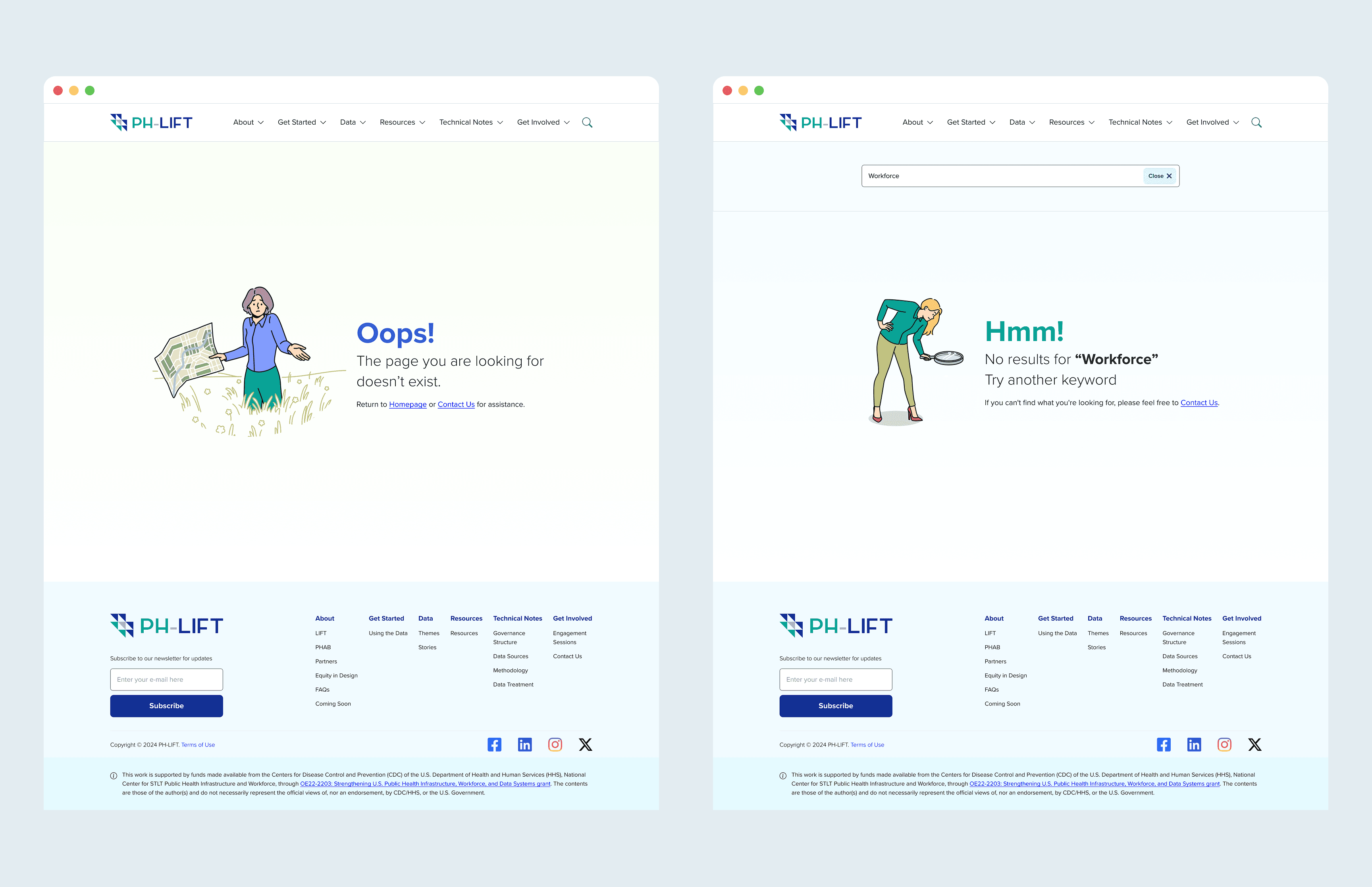
The design system defines a unified foundation for PH-LIFT, standardizing components, interaction patterns, and visualization rules across the platform. It enables consistency today and flexibility for future growth.


Results & Impact
Early validation indicates the system is performing as intended:
Data workflows are more structured and repeatable across the platform.
Visualization patterns are consistent, improving interpretability across dashboards.
The shared component library streamlined iteration cycles and reduced rework.
Reading mode
Visual mode
CLIENT
PH-LIFT, a national platform supporting 3,000+ local and 50 state health departments by centralizing public health data, delivering insights to guide decisions and improve community health.
TEAM
Project Manager
Data Specialist
Creative Director
Developers (2)
SERVICES
UX/UI Design
Design System
Rapid Prototyping
Accessibility (WCAG)
STACK
Dovetail
FigJam
Figma
D3.js
STATUS
Under Development
Challenge
In public health, clarity and trust are non-negotiable.
As a newly built public health platform serving researchers, policymakers, and health professionals, the product required a scalable design foundation capable of supporting dense dashboards, structured reporting, and long-term expansion without compromising consistency.
My Role
I established the design system from the ground up, defining the visual and interaction standards that unified the platform experience.
Key contributions:
Built reusable components and patterns to support complex dashboards and structured reporting.
Designed scalable dashboard layouts tailored for dense public health data.
Defined visualization principles in collaboration with engineers implementing D3-based charts.
Prototyped core workflows to validate structure and gather stakeholder feedback.
Documented component behavior and usage rules to maintain consistency as the product evolved.
Research & Insights
We interviewed stakeholders and prospective users to understand how different roles would access and use public health data. In parallel, I reviewed comparable public health platforms and data-heavy systems to identify gaps and proven interaction patterns.
The research surfaced several key needs, including:
The system had to support varying levels of digital literacy while remaining accessible at every layer.
Dashboards needed to present large amounts of data in a way that was easy to scan, compare, and interpret.
Visualizations had to move beyond static charts and clearly highlight trends, shifts, and outliers that support decision-making.
Design & Testing
I began by auditing the interface and defining a comprehensive UI inventory to standardize component behavior across the system.
I established the visual foundation through color, typography, grid, and spacing systems, ensuring accessibility and alignment with Ph-Lift brand.
The system evolved from foundational components to complex data modules, including responsive tables, filters, and comparison views designed to support D3.js powered dashboards in the front-end.
Each component was documented with clear usage rules and interaction guidance, creating a shared reference for design and engineering.
Interactive prototypes were tested with internal stakeholders through task-based sessions, validating real workflows and ensuring the system supported efficient data exploration.
Solution
The design system defines a unified foundation for PH-LIFT, standardizing components, interaction patterns, and visualization rules across the platform. It enables consistency today and flexibility for future growth.
Results & Impact
Early validation indicates the system is performing as intended:
Data workflows are more structured and repeatable across the platform.
Visualization patterns are consistent, improving interpretability across dashboards.
The shared component library streamlined iteration cycles and reduced rework.
Reading mode
Visual mode
CLIENT
PH-LIFT, a national platform supporting 3,000+ local and 50 state health departments by centralizing public health data, delivering insights to guide decisions and improve community health.
TEAM
Project Manager
Data Specialist
Creative Director
Developers (2)
SERVICES
UX/UI Design
Design System
Rapid Prototyping
Accessibility (WCAG)
STACK
Dovetail
FigJam
Figma
D3.js
STATUS
Under Development
Challenge
In public health, clarity and trust are non-negotiable.
As a newly built public health platform serving researchers, policymakers, and health professionals, the product required a scalable design foundation capable of supporting dense dashboards, structured reporting, and long-term expansion without compromising consistency.
My Role
I established the design system from the ground up, defining the visual and interaction standards that unified the platform experience.
Key contributions:
Built reusable components and patterns to support complex dashboards and structured reporting.
Designed scalable dashboard layouts tailored for dense public health data.
Defined visualization principles in collaboration with engineers implementing D3-based charts.
Prototyped core workflows to validate structure and gather stakeholder feedback.
Documented component behavior and usage rules to maintain consistency as the product evolved.
Research & Insights
We interviewed stakeholders and prospective users to understand how different roles would access and use public health data. In parallel, I reviewed comparable public health platforms and data-heavy systems to identify gaps and proven interaction patterns.
The research surfaced several key needs, including:
The system had to support varying levels of digital literacy while remaining accessible at every layer.
Dashboards needed to present large amounts of data in a way that was easy to scan, compare, and interpret.
Visualizations had to move beyond static charts and clearly highlight trends, shifts, and outliers that support decision-making.
Design & Testing
I began by auditing the interface and defining a comprehensive UI inventory to standardize component behavior across the system.
I established the visual foundation through color, typography, grid, and spacing systems, ensuring accessibility and alignment with Ph-Lift brand.
The system evolved from foundational components to complex data modules, including responsive tables, filters, and comparison views designed to support D3.js powered dashboards in the front-end.
Each component was documented with clear usage rules and interaction guidance, creating a shared reference for design and engineering.
Interactive prototypes were tested with internal stakeholders through task-based sessions, validating real workflows and ensuring the system supported efficient data exploration.
Solution
The design system defines a unified foundation for PH-LIFT, standardizing components, interaction patterns, and visualization rules across the platform. It enables consistency today and flexibility for future growth.
Results & Impact
Early validation indicates the system is performing as intended:
Data workflows are more structured and repeatable across the platform.
Visualization patterns are consistent, improving interpretability across dashboards.
The shared component library streamlined iteration cycles and reduced rework.